

GOLDEN GHEE
WHAT IS GHEE
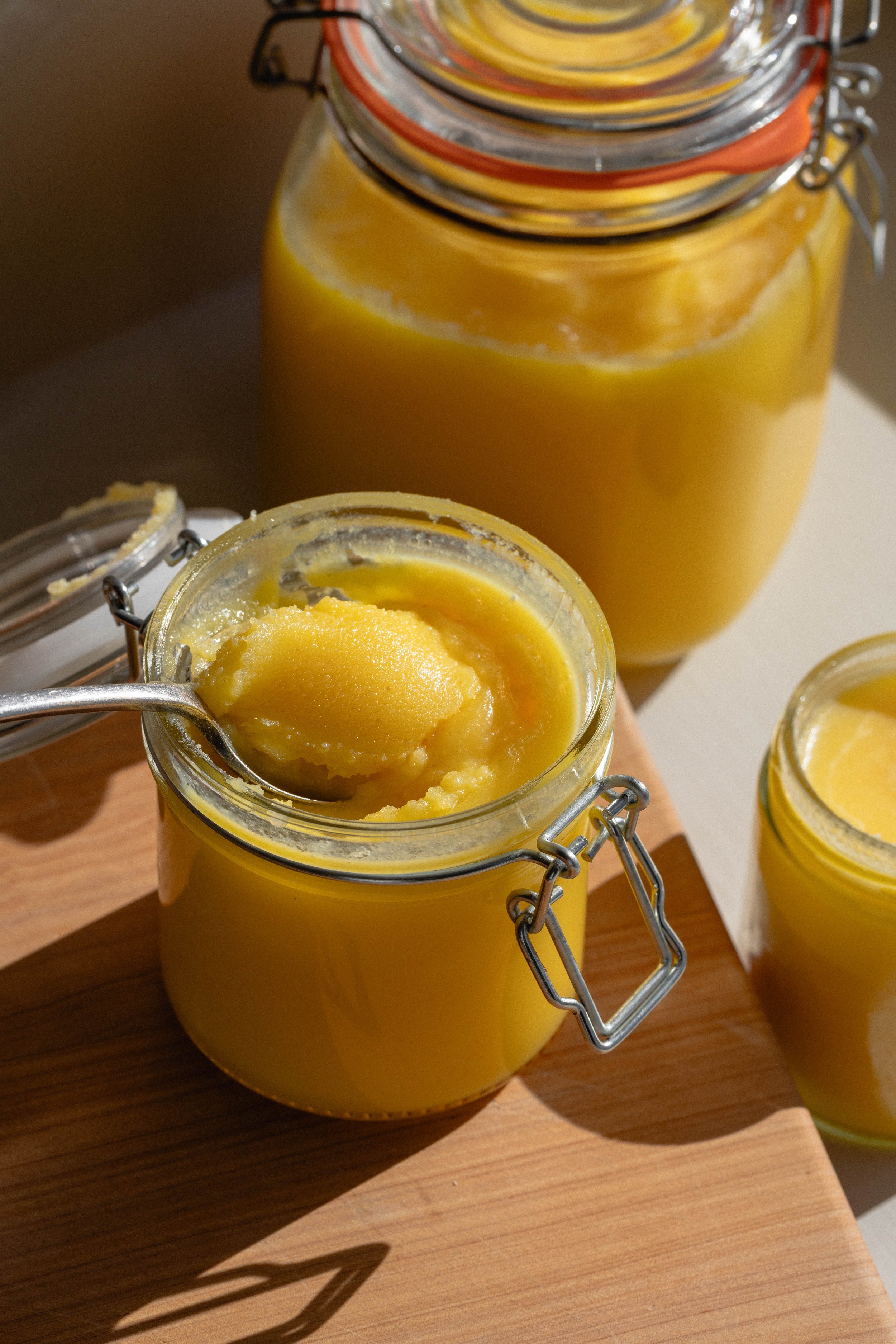
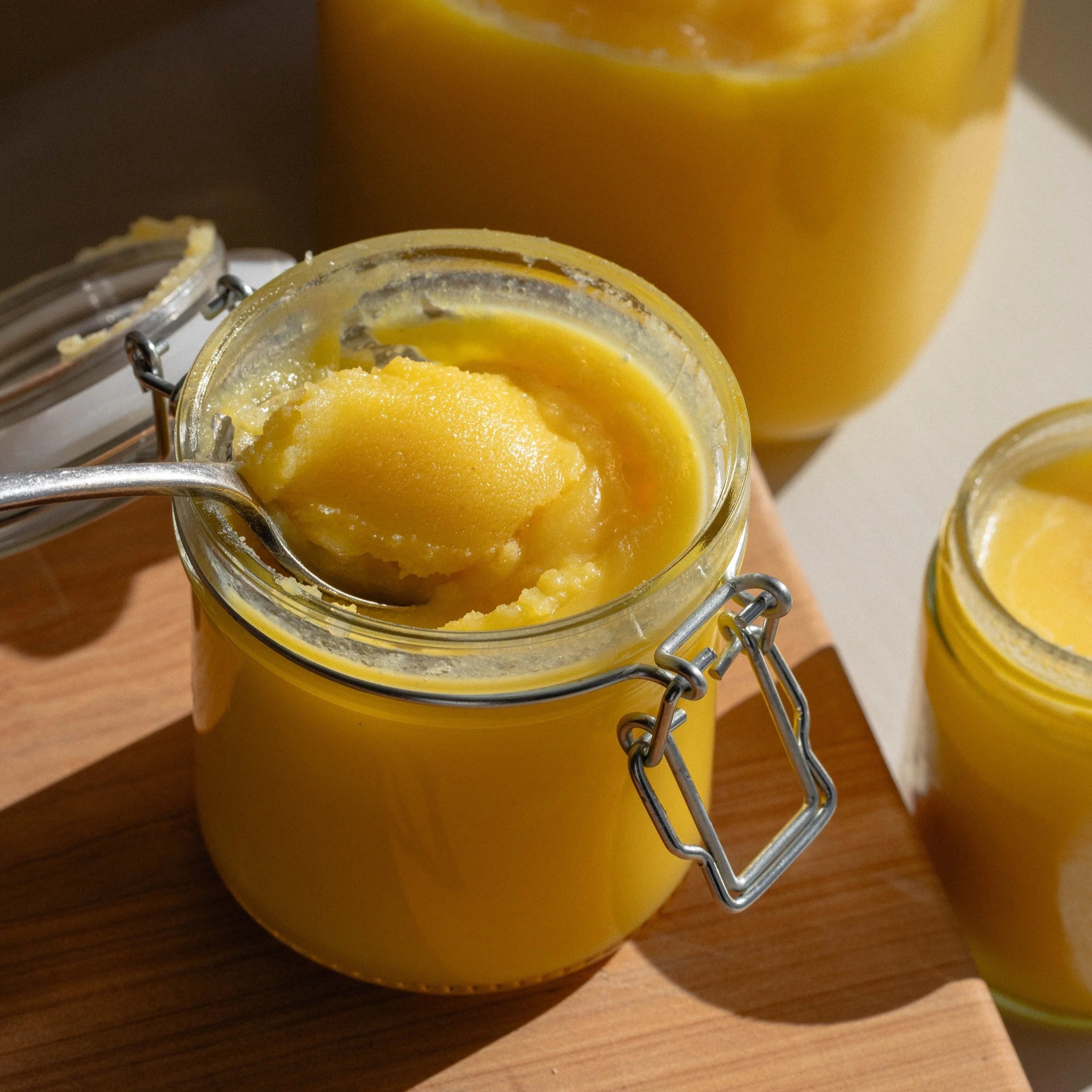
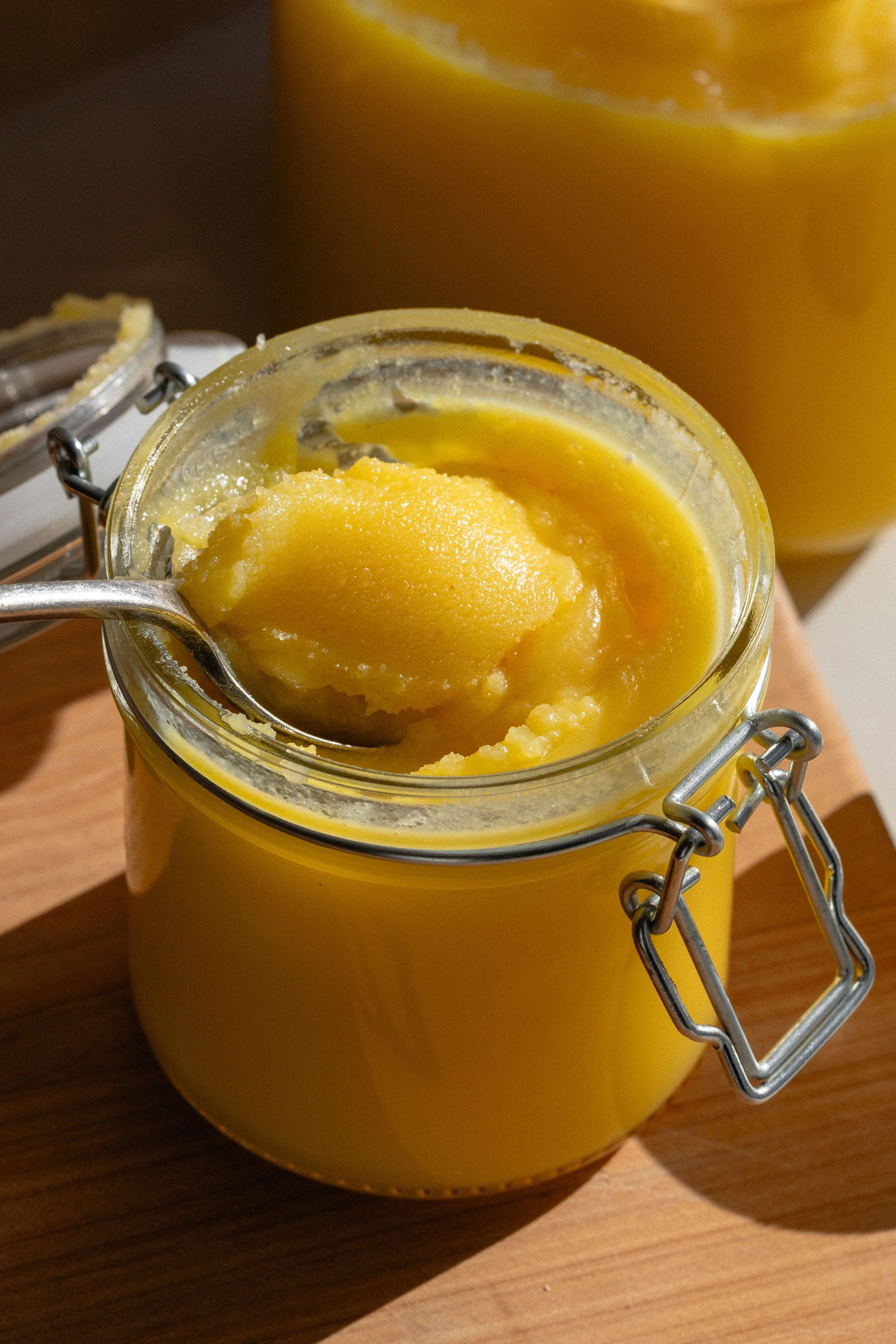
At its simplest, ghee is just clarified butter. It's made by slowly heating butter until the water evaporates and the milk solids separate from the pure butterfat. Once strained, you're left with a beautiful golden cooking fat with a rich, buttery flavour and a subtle nutty, caramel-like aroma. Ghee has been around for thousands of years and has its roots in India, where it's been used in everyday cooking and Ayurvedic medicine for generations. While it's become increasingly popular in recent years, it's a traditional fat that's stood the test of time.
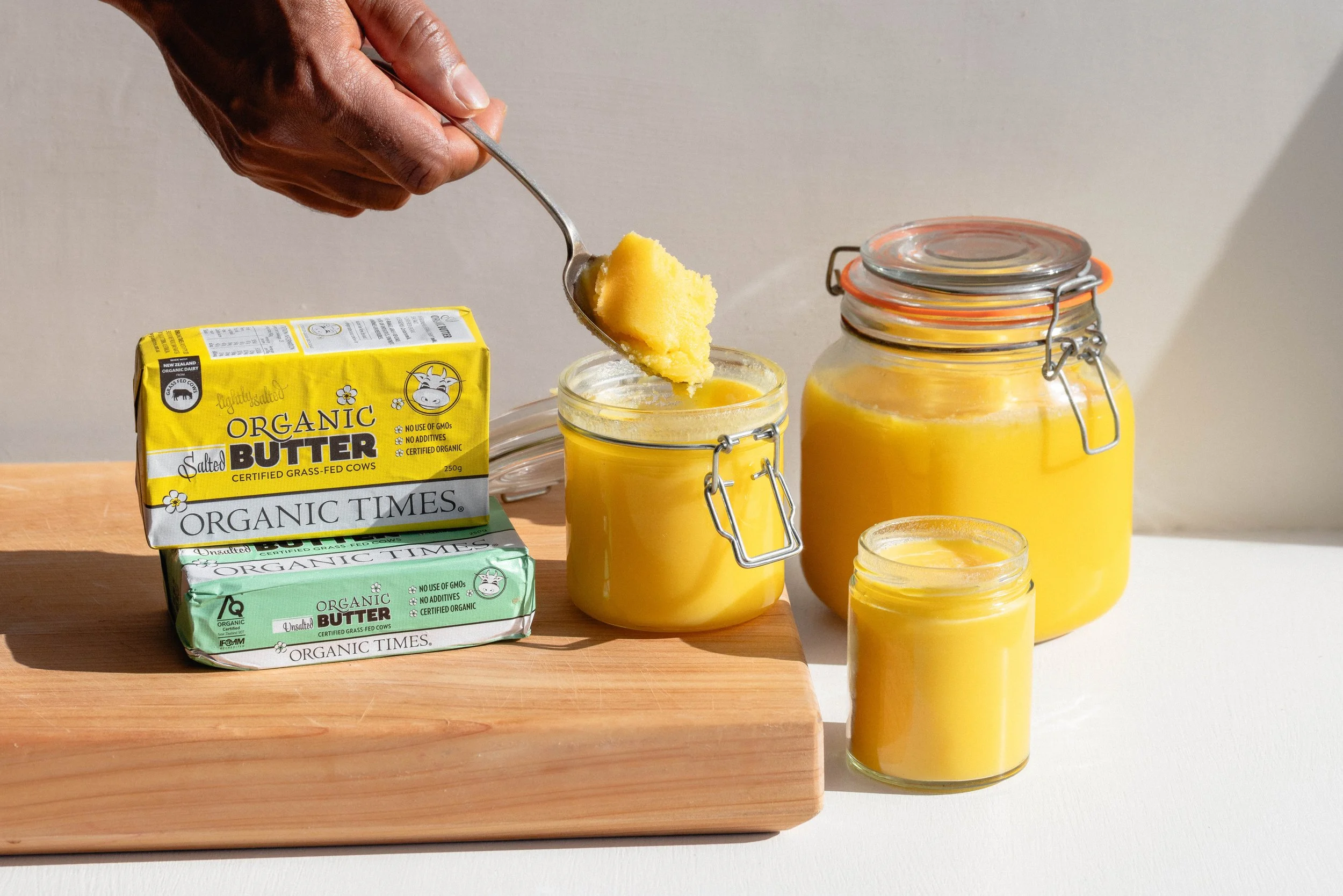
If you're making your own, I recommend using organic, grass-fed butter if you can. Compared to conventional butter, it's naturally richer in omega-3 fats, vitamins A, K2 and E, and conjugated linoleic acid (CLA). CLA is a naturally occurring fatty acid which supports metabolic health, immune function, healthy inflammatory responses and antioxidant activity.
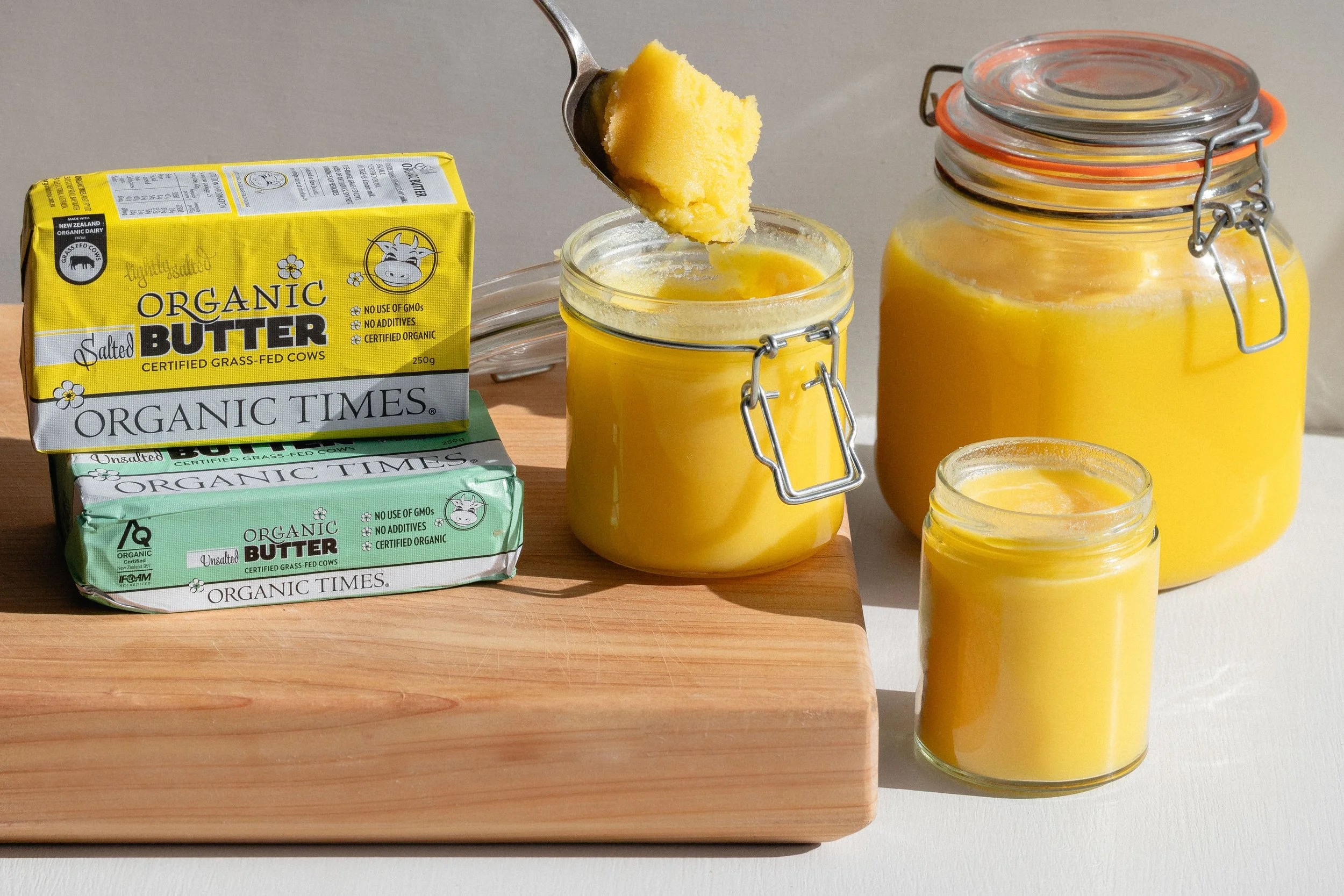
I used Organic Times Organic Grass-Fed Butter for this recipe (see stockists below)*, but any good quality butter will work. You can use either salted or unsalted butter, they both make delicious ghee, so simply use whichever you have on hand or prefer.
INGREDIENTS
4-6 x 250g grass-fed unsalted butter
INSTRUCTIONS
Preheat your oven to 120°C.
Place the butter into an oven safe dish and bake for 2–2½ hours (timing may vary slightly depending on your oven). As it cooks, the butter will naturally separate into three distinct layers: Bottom: Milk solids that have sunk to the base. Middle: Clear, golden butterfat (this is the ghee). Top: A layer of foamy or lightly browned "crunchy" milk solids.
Once the butter has fully separated into these three layers, remove it from the oven and allow it to cool to room temperature.
Using a slotted spoon (or regular spoon), carefully skim off and discard the top “crunchy” layer. Then slowly pour the golden ghee into clean glass jars, leaving the milk solids at the bottom of the dish behind. To make this easier, you can strain it through a muslin cloth or fine cheesecloth as you pour to make sure no milk solids pass through.
Seal the jars and store the ghee in the pantry, where it will remain soft, or in the refrigerator for an even longer shelf life (it will firm up when chilled). When all the milk solids have been removed, homemade ghee will keep for several weeks at room temperature or many months in the refrigerator.
*Organic Times Butter stockists – Australia
*Organic Times Butter stockists – New Zealand
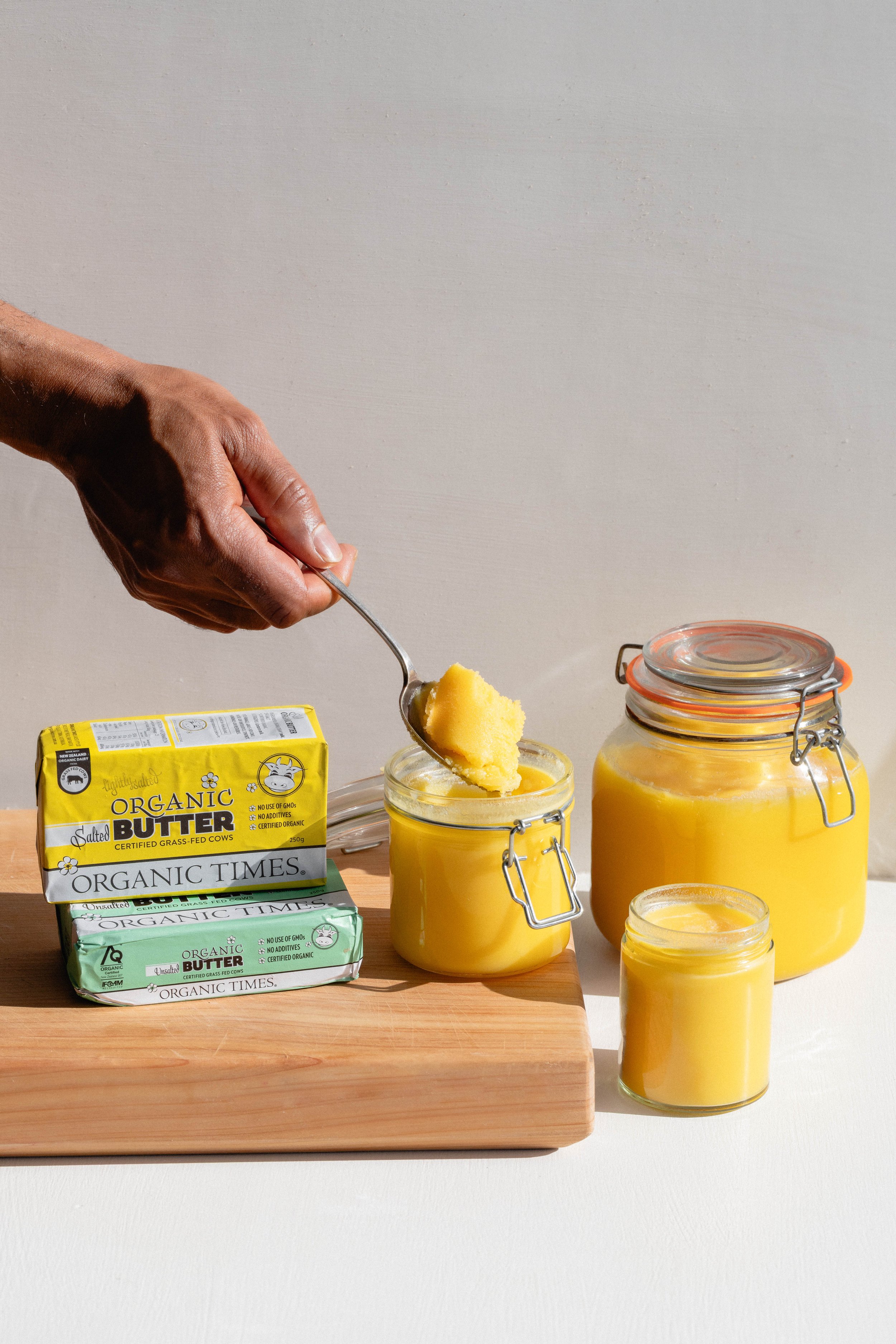
One of the great things about ghee is that removing the milk solids gives it a much higher smoke point than butter (around 250°C/485°F), so it's ideal for roasting, frying and other high-heat cooking. It's also naturally lactose free and contains only trace amounts of casein, which means some people who don't tolerate butter find they can enjoy ghee instead (although it's still not suitable for everyone with a dairy allergy). You can read more about the many benefits of ghee below;
10 Reasons Why Ghee Is A Superfood
Quisque iaculis facilisis lacinia. Mauris euismod pellentesque tellus sit amet mollis.